
The bones of the pelvis fuse early in life so we are left with three bones – the innominates (ilia and ischia) on both sides and the sacrum at the back and centre (the lower part of your spine). The main joints within the pelvic ring are the left and right sacroiliac joints and the pubic symphysis at the front. The thigh bones attach to the pelvic acetabulums via the hip joint.
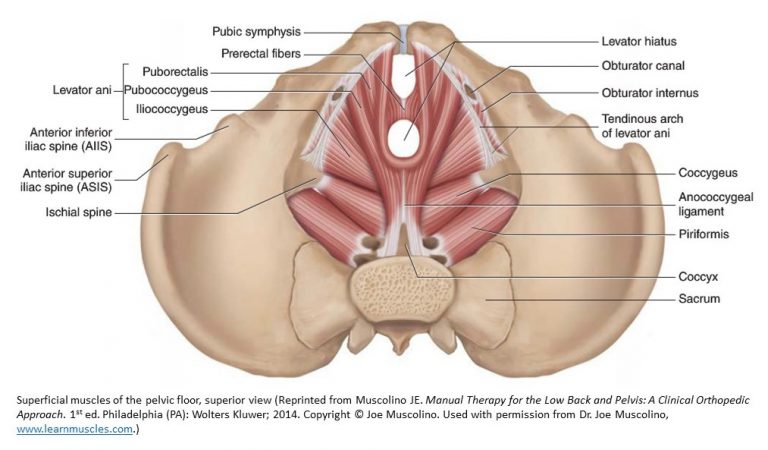
The pelvic floor is a myofascial sheet at the bottom of the pelvis that supports your pelvis and abdominal organs. The pelvic floor works in synergy with your abdominal muscles, diaphragm and back muscles to create the canister of “core muscles” that supports your trunk.
Common Pelvic Problems We Treat
- Sacroiliac joint (SIJ) pain
- Pubic symphysis pain
- Sciatica
- Muscle spasm
- Hamstring tendinopathy
- Gluteal tendinopathy
- Pelvic girdle pain – low back pain, pain across the back of the pelvis
- Coccyx injuries
- Incontinence
What does a dysfunctional pelvis look and feel like?
Any one (or more) of the following means the pelvis is not functioning at its 100% optimal level.
- Pain or discomfort in the pelvic area
- Difficulty with wide leg positions when sitting or standing
- Discomfort walking or during asymmetrical activities
- Discomfort which is worse in side lying
- Difficulty or pain getting into or out of the car
- Leaking when you cough, sneeze or laugh
- Pain during intercourse
Common Causes of Pelvic Pain
- Low back injury
- Nerve irritation
- Pelvic floor dysfunction
- Pregnancy
- Childbirth
- Falls
Disease processes within the abdomen create pain that alters the function the muscles of our abdomen and pelvis. Examples include:
- Endometriosis
- Irritable bowel disease (IBS)
- Crohn’s disease
- Bowel adhesions
- Pelvic congestion
How We Help
At PhysiYoga we aim to assess your whole body to determine what pressures your pelvis is under.
- Pain relief with joint and muscle releases or dry needling
- Real time ultrasound assessment of your core muscles (abdominal wall and pelvic floor) to help you effectively retrain your core muscles
- Advice and education regarding pelvic health
- Assessment of how the rest of your body is influencing your pelvis (and vice versa)
- Postural assessments
- Provisions of taping, braces and supports
- Exercise based rehabilitation
- Post-partum assessment and recommendations